Sole Betrayal: The Slip-On Shoe Is the Frenemy You Keep Inviting Back
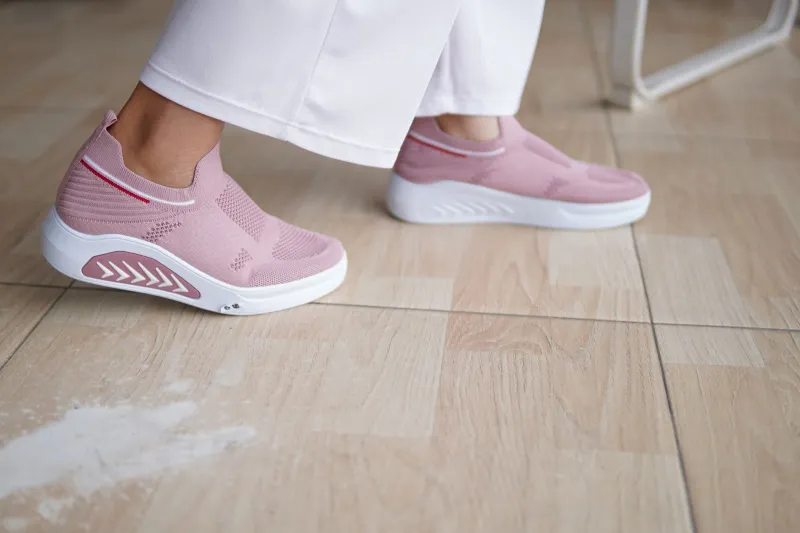
Let's be honest about what slip-on shoes actually are: a beautiful lie wrapped in canvas or leather, presented to us at eye level in a Nordstrom Rack and purchased with the full confidence of someone who has never once slipped in public. You grabbed them because they were easy. You grabbed them because you are a busy, modern, lace-fatigued person who simply does not have time for that nonsense anymore. And then you grabbed a stranger's arm in the Whole Foods entrance because the floor had been mopped twelve minutes ago and nobody thought to leave the sign up.
Welcome to the slip-on shoe experience. Population: all of us, scattered across wet floors from coast to coast.
The Promise vs. The Reality
The marketing for slip-on shoes is basically a lifestyle fantasy. The catalog shows someone breezing through a sun-drenched farmers market, maybe a cobblestone street in some vague European city, definitely not the fluorescent hell of a hospital waiting room with freshly polished linoleum. Nobody photographs the slip-on shoe in its natural habitat, which is: any surface that has encountered moisture in the last 48 hours.
The cruel irony is that the very features that make slip-ons appealing — the smooth sole, the snug fit, the zero-effort entry — are exactly what make them a liability the moment weather, cleaning crews, or a single spilled coffee enters the equation. You've essentially strapped two hockey pucks to your feet and called it fashion.
Traction? Minimal. Ankle support? Theoretical. Dignity? Negotiable.
The Treacherous Surfaces, Ranked by Betrayal Level
Not all floors are created equal, and if you're a slip-on loyalist, you already know this in your bones — possibly because you've landed on them.
Level 1: The Grocery Store Entrance Mat That Ends Too Soon. You think you're safe. The mat has you. Then the mat stops, and the tile begins, and your shoe makes a sound like a baby seal discovering ice for the first time.
Level 2: The Restaurant Bathroom Floor. Someone mopped with water and ambition and then left. The little yellow sign is there, technically, but it's folded and leaning against the wall like it gave up. You find out the hard way.
Level 3: The Hotel Lobby in December. Everyone is dragging in slush from outside. The marble floor is now a seasonal skating rink with a chandelier. Your slip-ons are useless here. Your slip-ons are actively working against you.
Level 4: Any Airport Moving Walkway Entry Point. The transition from stationary floor to moving belt has claimed more unsuspecting travelers than turbulence. In slip-ons, you're basically volunteering to audition for a pratfall.
Level 5: The Freshly Sealed Parking Garage. This one is a war crime. Nobody warns you. The surface looks normal. It is not normal. It is a trap made of asphalt and epoxy and it will take you DOWN.
Reader Confessions: The Survivors Speak
We asked our readers to share their most mortifying slip-on shoe moments. We expected a few responses. We received what can only be described as a national trauma database.
"I was walking into my job interview in loafers and hit the lobby tile. Full splits. I did not get the job. I have since purchased boots." — Derek, 34, Chicago
"I slid halfway across a Target in my Vans trying to grab a shopping cart that was rolling away. I caught the cart. I did not catch my pride. An employee slow-clapped." — Marisol, 29, Phoenix
"My slip-ons failed me at my own wedding. On the dance floor. During my first dance. My spouse still brings it up." — anonymous, because obviously
The common thread in every single one of these stories is the same: the shoes were comfortable right up until they weren't, and then they were catastrophic.
The Psychological Warfare of Knowing
Here's what nobody talks about: it's not just the falls that get you. It's the anticipation. Once you've slipped in public — once you've done the full arms-windmilling, face-going-pale, time-slowing-down experience — you never fully trust a floor again. You develop what can only be called Slip-On PTSD.
You start scanning floors for sheen. You notice whether the janitor's cart is still in the hallway. You clock every wet umbrella stand, every rain-damp entryway, every suspiciously reflective supermarket aisle. You develop a gait — a shuffling, slightly bent-knee shuffle — that your friends think is just how you walk now but is actually a full-time defensive posture against your own footwear.
You are living in a constant state of low-grade threat assessment. Because of shoes you bought for convenience.
The Breakup We Never Actually Make
The maddening part — the part that makes this whole thing genuinely tragic — is that we don't stop buying them. We slip, we recover, we feel the phantom embarrassment for weeks, and then we walk past a display of clean white slip-ons in the summer and think: those are cute and they look easy. And we buy them again.
Because they ARE easy. And life is hard enough without also battling shoelaces at 7 AM. So we accept the terms and conditions of the slip-on lifestyle, which include, buried in the fine print: occasional public humiliation on wet surfaces, possible loss of dignity, and a statistical probability of becoming someone's funny story.
We sign anyway. Every time.
Stay light on your feet out there. And maybe, just maybe, check the floor before you commit to your entrance.