Your Bathroom Mirror Is Lying to You and Every Other Mirror Is the Prosecution
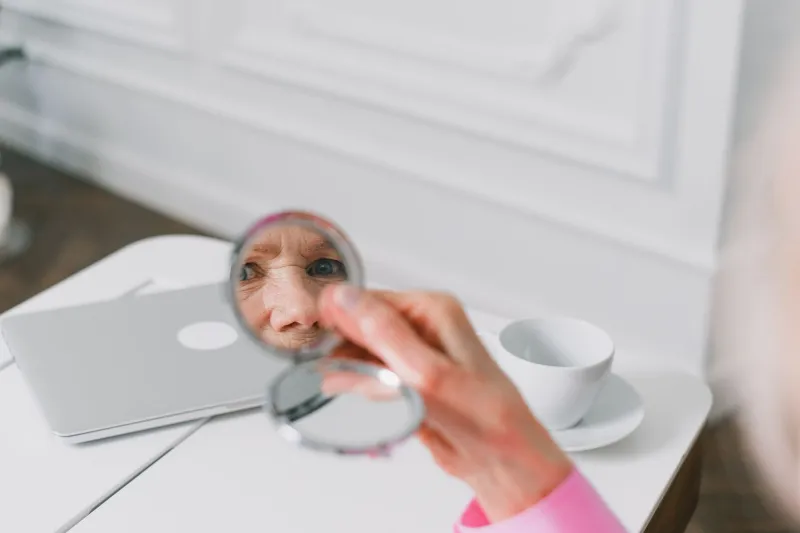
At some point today, you looked in your bathroom mirror and made a judgment call. You decided: acceptable. Good enough. Ready for public consumption. You left the house with that confidence intact, maybe even a little extra, because the lighting was good and things seemed to be going your way.
And then you walked past a mirror in the wild — a department store fitting room, a restaurant bathroom, the dark glass of an elevator door — and came face to face with the actual truth. And the truth was wearing your outfit and your hair and your expression, but somehow looked like a completely different, significantly more disheveled person than the one who left the house forty-five minutes ago.
This is the Mirror Discrepancy. It is real, it is universal, and it is slowly eroding our collective ability to trust our own eyes.
The Bathroom Mirror Is in a Committed Relationship With Your Ego
Let's start by understanding the crime scene. Your bathroom mirror is not a neutral party. It has been hanging in that spot, at that angle, under that specific light, for long enough that it has essentially become your hype man. It knows your good side. It knows the exact distance at which you look best. It has been calibrated, whether you realize it or not, by years of you standing in the same spot making the same assessment.
The lighting in most bathrooms is also doing heavy lifting on your behalf. Overhead vanity bulbs, warm-toned bulbs, even the soft diffusion of natural light through a frosted window — all of these are, functionally, filters. Your bathroom mirror experience is the Instagram of reflections: technically accurate, deeply optimized.
You are not seeing yourself. You are seeing your best available version, gently lit and favorably framed, every single morning. Of course you feel good leaving the house. You've been deceived by infrastructure.
The Department Store Fitting Room Is a War Crime
Nothing — and we mean nothing — prepares you for the fluorescent overhead lighting of a retail fitting room. These lights were engineered, seemingly with malicious intent, to illuminate every pore, texture, shadow, and choice you have ever made. They do not flatter. They do not soften. They do not care about your self-esteem or your previous positive mirror experiences.
The fitting room mirror is the forensic investigator of reflective surfaces. It is not interested in how you'd like to look. It is interested in documentation.
You walk in holding something cute off the rack, catch your reflection under those lights, and spend the next six minutes questioning decisions that have nothing to do with the shirt you were trying on. Suddenly it's not about the shirt. Suddenly it's about everything. The shirt is fine. You are having a moment.
This is not vanity. This is a completely rational response to being ambushed by accurate lighting after months of bathroom mirror propaganda.
The Physics of Why This Keeps Happening
There's actual science involved here, which is both comforting and deeply annoying. The distance you stand from a mirror changes how you appear — closer distances create slight distortion due to perspective, and most people stand very close to their bathroom mirrors. The angle of the mirror relative to your eye line matters. The color temperature of light dramatically affects how skin tones read. Warm light (yellowish, incandescent) is flattering. Cool light (bluish, fluorescent) is brutally honest.
Beyond that, there's the phenomenon of self-familiarity. You've been looking at your own face your entire life. Your brain has built a model of what you look like, and it actively filters your mirror experience through that model. You don't always see what's there. You see what you expect to see, corrected slightly by reality. This is why you look fine in your bathroom and then catch your reflection in a store window and think: who is that person and why are they wearing my jacket.
The store window, by the way, is perhaps the most savage mirror of all. No frame. No context. Just a sudden, full-length, unexpected confrontation with yourself mid-stride, usually at the exact moment you were feeling your best.
The Elevator Door: A Special Category of Betrayal
We need to discuss the elevator door as a reflective surface, because it deserves its own moment of recognition. The dark, slightly convex, poorly polished surface of a stainless steel elevator door does something to a human face that no other mirror replicates. It creates a funhouse quality that is somehow also unflattering in a completely realistic way. You look at yourself in an elevator door and you see: approximately you, but tired. Always tired. Even if you slept eight hours. The elevator door version of you has seen things.
You ride up three floors. You exit. You have aged emotionally.
The Existential Question Nobody Wants to Answer
Here's where it gets genuinely unsettling: which one is real? The bathroom mirror version or the fitting room version? The warm-lit you or the fluorescent you? The confident person who left the house or the one the store window caught off-guard?
The uncomfortable answer is that they're both real, in the same way that a photograph of you looks different depending on the camera, the angle, and the light — and yet you are the same person in all of them. There isn't one true reflection. There are only conditions.
Which means, in a very practical sense, that your bathroom mirror isn't lying to you. It's just showing you one version of the truth. A generous version, sure. A version that has been gently optimized by habit and familiarity and warm bulbs. But still — technically — a version.
The fitting room mirror is also not lying. It's just showing you the unedited cut. The director's commentary version. The one that answers the question you never actually wanted to ask.
The Move Going Forward
You have a few options. You can upgrade your bathroom lighting to something more honest, which will either build genuine confidence or destroy your morning routine entirely — flip a coin. You can start doing a quick "reality check" mirror stop on the way out, somewhere with better light, which adds three minutes to your commute but saves you from elevator door ambushes. Or you can simply accept that you exist in multiple mirrors, look different in all of them, and that the version of you that walked out of the house this morning was good enough for the person who made that call.
The bathroom mirror believes in you. That counts for something.
Even if the fitting room has receipts.