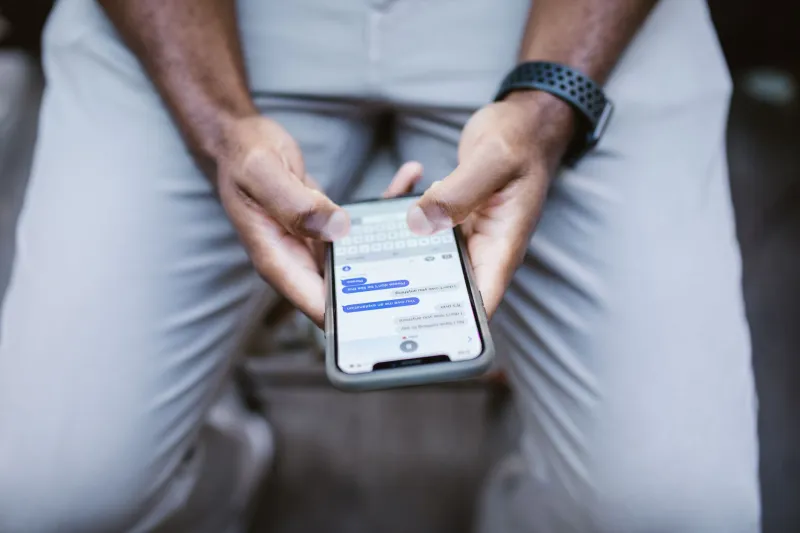
Your Phone Isn't Buzzing. Your Brain Is Just Broken Now.
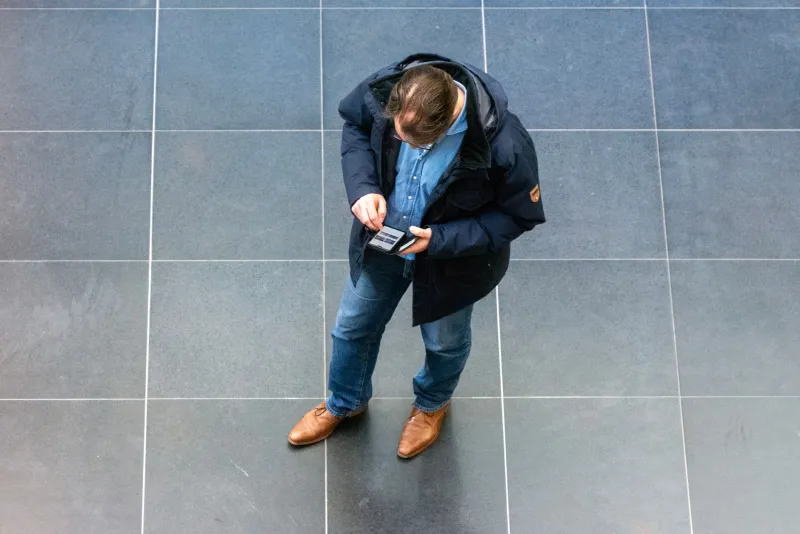
It happens in the cereal aisle. It happens during a perfectly good movie. It happens, with humiliating frequency, while your phone is charging in another room entirely. That familiar little buzz — the one that says someone needs you, something happened, check it, CHECK IT — fires off in your thigh like a tiny electrical ghost, and you jam your hand into your pocket so fast you nearly dislocate your wrist.
Nothing. Absolutely nothing. Just your own leg, sitting there, existing quietly, betraying you.
Welcome to Phantom Vibration Syndrome. It's real, it has a name, and if you're reading this, you almost certainly have it.
The Science, Explained By Someone Who Barely Passed Biology
Here's the deal: researchers — actual ones, with credentials — have studied this phenomenon and found that somewhere between 70 and 90 percent of smartphone users experience phantom vibrations. Not occasionally. Regularly. Like, this is just a thing your brain does now because you let it get attached to a rectangle.
The working theory is that your nervous system has become so finely tuned to the specific sensation of a phone vibration that it starts pattern-matching random stimuli — a muscle twitch, a brushing fabric, the ambient hum of being alive — and confidently misfiling them under "NOTIFICATION." Your brain, bless its overworked little neurons, has essentially created a dedicated alert system for a device that didn't exist twenty years ago. It rewired itself. For Instagram.
Neuroscientists call this hypervigilance to social signals. The rest of us call it being completely and utterly cooked.
The Pavlov comparison writes itself, honestly. You've been conditioned. Every buzz that ever meant a text from someone you liked, a work email that needed a reply, a meme your cousin sent at 11 PM — all of it trained your nervous system to treat that vibration like a survival cue. And now your body is just doing it on its own, unprompted, like a dog that keeps running to the door even when nobody knocked.
The Specific Flavor of Panic This Creates
What makes phantom vibration syndrome particularly unhinged is the emotional arc it puts you through in approximately 1.5 seconds.
First: the buzz. A little jolt of anticipation. Someone reached out. I am wanted. I exist in the social ecosystem.
Second: the reach. Hand to pocket, muscle memory engaged, body already composing itself into the posture of a person who is about to receive information.
Third: nothing. The phone isn't even there, or it's there and dark, or it's there and lit up but only because the battery is at 20% and it's judging you.
Fourth: the specific deflation of a person who was just excited about nothing. A tiny grief. A microscopic mourning. You weren't even consciously hoping for a message, and somehow you're still disappointed that there wasn't one.
This is the gaslighting part. Your brain manufactured desire, delivered a false promise, and left you holding the bag — all in the time it takes to blink. Do this forty times a day and you start to understand why everyone seems vaguely unhinged at all times. We are being emotionally jerked around by our own nervous systems on a continuous loop.
The People Who Have It Worst (You Know Who You Are)
Not all phantom buzzers are created equal. There's a spectrum here, and it tracks almost perfectly with how anxiety-adjacent your personality already is.
If you're the kind of person who refreshes their email before they've finished reading the last one, you are in the deep end. You probably feel phantom buzzes multiple times per hour. You have almost certainly patted your pocket to check for a phone that is currently in your hand. You are, and I say this with love, not okay.
Then there's the work-phone crowd — the people who carry a personal device AND a company device and have therefore doubled their phantom surface area. These individuals have been known to check both phones in response to a vibration that was, ultimately, a truck driving past outside.
And finally, there are the people who feel it even when they've left their phone at home intentionally. The ones who went for a run without it, specifically to disconnect, and still felt the buzz somewhere around mile two. The phantom has fully decoupled from the physical object. The haunting is internal now. There's no exorcism for this.
How We Got Here (A Brief, Bleak Timeline)
It's worth pausing to appreciate the journey. There was a time — not long ago in the grand scheme of human history — when you could sit in a chair and simply be in the chair. No pinging. No buzzing. No ambient dread that you might be missing something. You were just a person in a chair, thinking about whatever people thought about before they had pocket computers.
Now we have trained ourselves, voluntarily, to be on-call at all times. We set our phones to vibrate so we wouldn't bother other people. Polite, considerate, reasonable. And in doing so, we apparently taught our bodies to generate the sensation independently, like some kind of deeply inconvenient superpower.
The technology evolved faster than our nervous systems could sensibly adapt, and the result is that we are all walking around with brains that are fundamentally better suited for checking for predators than for managing a 24/7 notification ecosystem — but are gamely trying to do both simultaneously. Something had to give. Apparently, it was our grip on reality.
So What Do You Actually Do About It
The honest answer is: not much, and also possibly nothing.
You can reduce notification frequency. You can put your phone in a different room at night. You can take digital sabbaths, screen-free Sundays, phone-in-a-drawer hours. All of this is good advice that most of us will read, nod at sincerely, and then immediately not do.
What you can do is recognize the phantom buzz for what it is: your brain trying very hard to keep up with a world it wasn't designed for, doing its best, failing in a way that is deeply relatable and a little bit funny if you squint.
Feel the fake buzz. Check the empty pocket. Experience the tiny disappointment. Then put your hand back at your side and acknowledge that you are a biological creature running anxiety software on hardware that peaked around the savanna era, and you are doing your best.
We all are.
Your phone is fine. Your pocket is fine.
Your brain, though? Your brain is absolutely making things up now, and it's going to keep doing it, and honestly — given everything — that feels pretty on-brand for the current era.
At least we're all in this together. I'd text you about it, but you'd probably feel it before I hit send.