Sent. Oh God. SENT: The Autocorrect Betrayals That Have Ended Friendships, Careers, and Dignity
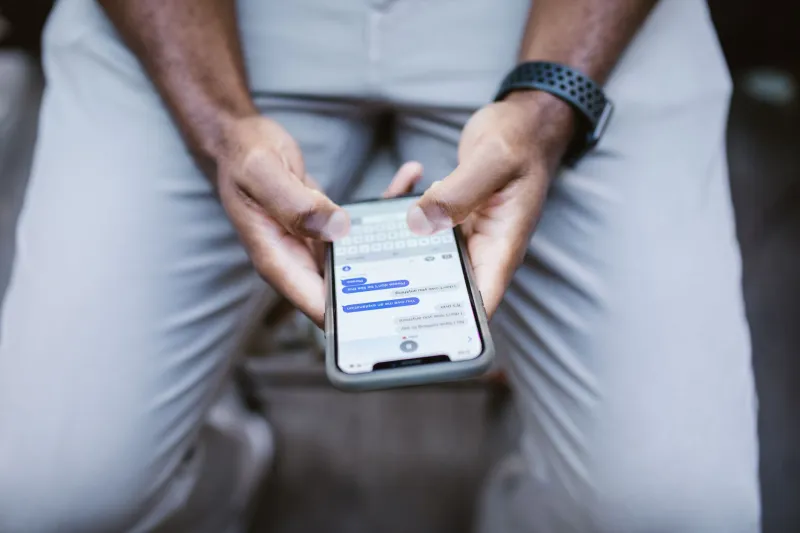
There is a specific kind of horror that has no name in the English language. It arrives in the half-second after you hit send — that electric, stomach-dropping moment when your eyes catch the word your phone chose instead of the word you typed. Your thumb hovers. The message has already been delivered. The little checkmark mocks you. And somewhere across town, your boss, your mom, or your entire 47-person work Slack channel is reading it right now.
Autocorrect was supposed to help us. That was the promise. A helpful little digital assistant smoothing out our typos, catching our fat-fingered fumbles, making us look like the articulate, competent adults we desperately want to be. Instead, it became the most reliably chaotic gremlin in modern communication — a tiny algorithm with an apparent personal vendetta against every single one of us.
Welcome to the Autocorrect Apocalypse. Population: everyone with a phone and a pulse.
The Phone Knows What It's Doing (And It's Doing It on Purpose)
Here's the thing about autocorrect that nobody wants to say out loud: it's too confident. It doesn't suggest. It doesn't ask. It simply decides, with the energy of a toddler who has just discovered a permanent marker, that it knows better than you. You typed "duck." Your phone typed something else. Your phone is wrong. Your phone does not care.
The cruelest part is the timing. Autocorrect doesn't strike when you're composing a casual text to your roommate about pizza toppings. It waits. It lurks. It reserves its most spectacular failures for the group chat with your in-laws, the all-staff email to 200 coworkers, or — and this one's a classic — the very first text to someone you're genuinely trying to impress.
Research suggests that autocorrect errors spike when we're typing quickly, emotionally, or distracted. Which is to say: always. We are always typing quickly, emotionally, and distracted. Our phones know this. They have built an entire chaos economy around it.
The Group Chat: A Crime Scene
If autocorrect is the villain, the group chat is its favorite crime scene.
There is something uniquely devastating about a catastrophic autocorrect fail landing in a group context. In a one-on-one text, you can recover. You can send the frantic follow-up, the laughing emoji, the "AUTOCORRECT I SWEAR" explanation. In a group chat, your humiliation is witnessed simultaneously by twelve to forty-seven people, all of whom screenshot faster than you can type a correction.
One reader — who asked to remain anonymous, which, fair — described sending what was meant to be a cheerful "Happy Thanksgiving!" to her extended family group chat, only to have her phone swap the final word for something that rhymed with it but was decidedly not a holiday greeting. Her aunt responded with a prayer emoji. Her cousin responded with three laughing-crying faces. Her grandmother, who is 84 and does not fully understand group chats, responded four hours later with "who is this."
Another reader, a project manager in his mid-thirties, attempted to tell his team that a client presentation had been "shifted" to Thursday. His phone had other plans. The word his phone chose was not "shifted." The client was CC'd on the thread. There was an HR conversation.
The Romantic Catastrophe Tier
If the group chat is the crime scene, the early-stages-of-dating text thread is the crime scene with news cameras outside.
Autocorrect failures in romantic contexts operate on a different level of awful because they arrive at the exact moment you are trying hardest to seem normal. You're crafting the perfect low-key "hey, had a really great time" text — casual but warm, interested but not desperate — and your phone decides that "excited" should be "excruciating" or that "dinner" should be "diaper."
One reader submitted a story about trying to tell a new date that she looked "stunning" in her photos, only to have her phone reroute to "stunning" becoming "stunned." The resulting sentence read like a medical observation rather than a compliment. The date responded with "...thanks?" They did not go on a second date.
Another reader tried to text his girlfriend that he missed her "so ducking much" — a deliberate, ironic use of the classic autocorrect swap — only for his phone, apparently fed up with being predictable, to correct it back to the actual profanity. His girlfriend's mother was visiting. His girlfriend was showing her the text. This is a true story.
The Workplace Incident Report
Professional autocorrect disasters deserve their own category, their own support group, and possibly their own OSHA filing.
The workplace is already a minefield of communication anxiety. Every email is a potential misunderstanding. Every Slack message risks being read in the wrong tone. And then autocorrect shows up to add a layer of chaos that no amount of professional development training could have prepared you for.
Classic workplace autocorrect hits include: "pubic" instead of "public" (a perennial favorite that has derailed more company announcements than anyone will officially admit), "ducking" making a surprise uncensored appearance in a client proposal, and — submitted by a reader who works in HR, which makes it cosmically funnier — an internal memo that was supposed to reference "staff training" being sent as something that will not be reprinted here but rhymes with it phonetically.
The follow-up emails in these situations are their own art form. The combination of mortification, forced professionalism, and desperate humor required to explain a catastrophic autocorrect to your entire department is a skill they simply do not teach in business school.
The Five Stages of Autocorrect Grief
For those who have lived through a major autocorrect incident, the emotional journey is well-documented:
- Denial — "Maybe nobody saw it yet. Maybe I can delete it. Does this app have a delete function. WHY DOESN'T THIS APP HAVE A DELETE FUNCTION."
- Bargaining — "If I send the correction immediately, maybe it'll be fine. Maybe they'll think it was a joke. I can make this a joke."
- Anger — Directed entirely at the phone, which is an inanimate object and does not care.
- Despair — The realization that the screenshot already exists.
- Acceptance — "I guess this is who I am now. This is my legacy."
So What Do We Do About It?
The honest answer is: not much. You can turn autocorrect off, but then you're left entirely at the mercy of your own thumbs, which — have you seen your thumbs? They are not precise instruments. You can slow down and proofread every message, but that requires a patience most of us simply do not possess in a world of instant communication and perpetual distraction.
Or — and this is the Slipp3ry When Wet official recommendation — you can accept that the Autocorrect Apocalypse is simply part of modern life. Your phone will betray you. It will do it at the worst possible moment. The group chat will witness it. Someone will screenshot it.
And then, eventually, you will laugh about it. Probably.
Maybe not for a few years. But eventually.
In the meantime: proofread your texts. Or don't. Honestly, the chaos is funnier.