You're on Mute, Karen: A Survivor's Guide to the Zoom Era We Never Escaped
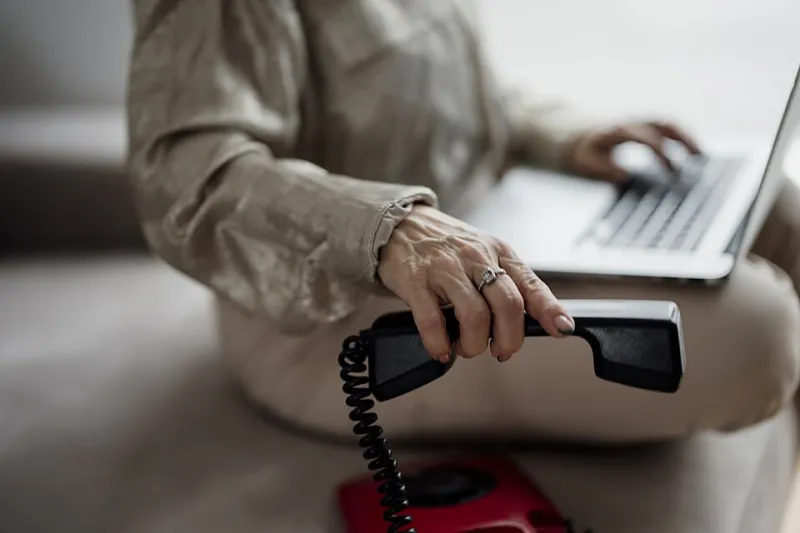
Photo: Shixart1985, CC BY 2.0, via Wikimedia Commons
The Day We All Became Extremely Online and Extremely Weird
There was a before time. A time when "joining a meeting" meant physically walking to a room, sitting in a chair, and staring blankly at a whiteboard while someone explained synergy. It was boring. It was soul-crushing. But it was normal.
Then 2020 happened, and suddenly we were all hunched over laptops in our pajama bottoms, desperately angling Ring lights like we were filming a low-budget reality show called My Life: The Fluorescent Edition. We learned new vocabulary — bandwidth, breakout rooms, virtual backgrounds — and we lost something ancient and irreplaceable: the ability to exist in front of a camera without immediately making a face like we just smelled something suspicious.
Five years later, we have not recovered. Not even a little.
The Camera-On Anxiety Industrial Complex
Let's start with the camera, because nothing has done more psychological damage to the average American professional than the little green light that means someone can see your face.
Having your camera on during a video call introduces a level of self-awareness that human beings were never evolutionarily designed to handle. You are simultaneously trying to listen to a presentation about Q3 deliverables and watching yourself listen to a presentation about Q3 deliverables. It's like holding a mirror up while you eat — technically possible, profoundly unsettling.
The result is a phenomenon I call the Zoom Face: that slightly too-attentive, slightly too-still expression you wear when you know you're being watched. You nod at precise intervals. You furrow your brow to signal engagement. You have, essentially, become a very bad actor performing the role of "a person paying attention."
And then there's the background situation. Oh, the background situation. Some people go virtual background, which means they spend the first four minutes of every call flickering in and out of existence like a glitchy hologram. Some people do the curated bookshelf, which communicates I am intellectual and also own books I have definitely read. Some people just... have whatever's behind them. A laundry pile. A motivational poster from 2009. A partner shuffling through in boxers who does not know the camera is on. We've all seen it. We've all pretended we didn't.
The Mute Button: Gateway to a New Kind of Power
Here is a thing that is true: the mute button fundamentally altered the social dynamics of human communication, and nobody has fully reckoned with what we've done.
Before video calls, if you were in a meeting and someone said something you disagreed with, you had limited options. You could sigh audibly. You could write something passive-aggressive on a sticky note. You could stare at the ceiling with the specific intensity of someone who has chosen not to speak but wants everyone to know they have thoughts.
Now? You can unmute yourself with the energy of someone who has been waiting their entire life for this moment. The dramatic unmute is a power move. The slow unmute, where someone fumbles for three full seconds while the room waits in silence, is a different kind of power move — chaotic, unintentional, deeply human.
And then there is the classic: someone speaking for an entire minute while muted, completely unaware, while eight people on the call make increasingly desperate hand gestures. There is no experience more humbling. There is no experience more universal. We have all been that person. We will all be that person again.
The Frozen Screen: Plausible Deniability for the Modern Age
I need to talk about the fake freeze, because I think it deserves its own entry in the cultural lexicon.
At some point during the pandemic, we all discovered that if you simply... stopped moving... for a few seconds, you could plausibly claim that your internet "froze." This is not a glitch. This is a strategy. Someone asks you a question you don't have an answer to? Freeze. Your boss wants to know why the report isn't done? Freeze. Someone suggests doing a fun icebreaker activity and you would genuinely rather combust?
FREEZE.
The fake freeze is the 21st-century version of pretending you didn't get the text. It's beautiful in its simplicity and devastating in its transparency, because everyone on the call absolutely knows what you're doing and nobody says anything because they have all done it too. It is a silent pact. A digital Geneva Convention.
Eye Contact: The Final Frontier We Ruined
Here is a thing that will make you feel weird if you think about it too long: on a video call, to make eye contact with someone, you have to look away from them. You have to stare directly into the camera lens — a small, soulless dot — while the human face you're supposedly connecting with sits slightly below or to the side of your field of vision.
This means that every moment of genuine, camera-to-camera eye contact during a video call is actually an act of performance rather than connection. You're not looking at the person. You're looking past them, into a void, while simulating intimacy for an audience.
We have been doing this for years. We have normalized it completely. And somewhere in the process, a lot of us lost the ability to hold natural eye contact in real life too, because we spent so long training ourselves to look at a camera instead of a face.
Therapists are booked out six weeks. Make of that what you will.
We're Never Going Back, Are We
The honest truth is that video calls aren't going anywhere, and neither are the strange social tics we've built around them. We will continue to say "can everyone hear me?" despite having confirmed audio three times. We will continue to talk over each other, apologize, say "no, you go ahead," and then both start talking again simultaneously. We will continue to end calls with a cheerful "okay, bye!" and then sit in silence staring at the screen for four seconds before someone actually hangs up.
And we will, every single time, wave goodbye to the camera. To a grid of tiny rectangles. To people who cannot see us waving because we're all already closing our laptops.
It's weird. It's deeply, specifically weird. And somehow it's just life now.
Camera off. You're on mute. See you next Tuesday.